

Beyond the Headline Premium: Did Prestige Holdings Shareholders Receive Fair Value?
- Daniel Tittil
- Aug 6
- 14 min read


Peter Permell’s legal challenge raises an important procedural question. The valuation raises an equally important economic one.
When Agostini Limited offered to acquire Prestige Holdings Limited, the transaction was widely presented as attractive to PHL shareholders.
The terms appeared straightforward:
For every 4.8 PHL shares surrendered, the shareholder would receive one Agostini share.
At the time the offer was promoted, Agostini’s quoted share price was approximately TT$67. Dividing TT$67 by 4.8 produced an implied value of almost TT$14 for each PHL share; roughly 34% above PHL’s referenced market price of TT$10.45. On the surface, that looked like a generous premium.
But a share-for-share takeover cannot be assessed solely by dividing one quoted market price by another.
The investor is not receiving cash. The investor is exchanging ownership of one business for ownership of a different and enlarged business. The correct question is therefore not simply:
What was one Agostini share trading at before the takeover?
It is:
What should one share of the combined company be worth after PHL’s business is added and millions of new Agostini shares are issued?
This question is central to understanding why some PHL shareholders may have decided not to accept the offer, and why they may believe they did not receive the full economic value of their investment.
What Peter Permell’s article is really about
Minority shareholder advocate Peter Permell has publicly questioned whether Agostini complied with By-law 26 of the Securities Industry (Take-Over) By-Laws, 2005.
The offer formally closed on June 23, 2026, after approximately 96.8% of PHL’s outstanding shares had been validly tendered. Agostini stated that it would not use the compulsory-acquisition, or “squeeze-out,” provisions of the Companies Act because the applicable statutory timeframe had elapsed.
Permell’s argument is that the expiry of the Companies Act squeeze-out process does not eliminate a separate right contained in By-law 26.
By-law 26 says that where an offeror, its affiliates and associates acquire at least 90% of a class of shares, holders whose shares were not included in reaching that threshold are entitled to require the offeror to acquire their shares. The offeror must, within 30 days after becoming aware that those rights have arisen, send written notice to each eligible holder.
That notice must include:
the price the offeror is willing to pay;
the basis used to determine that price;
where supporting valuation material can be examined; and
the shareholder’s right to ask the Court to determine fair value.
Permell’s central legal point is therefore credible: the Companies Act squeeze-out and the By-law 26 minority buy-out right are distinct mechanisms.
However, the public record alone does not establish conclusively that Agostini has breached the By-laws. The precise settlement date, the date on which Agostini became legally aware that the threshold had been satisfied, and whether private notices were sent to eligible shareholders would all be relevant ( I did not receive one and it seems like Mr. Permell did not as well). The principal By-law 26 obligation is imposed on the offeror, Agostini, rather than on PHL itself (perhaps Permell's letter should be addressed to Agostini since it was addressed to PHL instead).
While that legal issue remains to be resolved, it leads to an equally important financial question:
If the remaining shareholders are entitled to be bought out, what would fair value actually look like?
Why might a PHL shareholder have rejected the offer?
Public disclosures do not tell us why every non-accepting shareholder declined the offer.
Different investors may have had different reasons.
Some may have preferred PHL as a focused restaurant company. Others may have been dissatisfied with the exchange ratio, concerned about receiving lower dividend income, reluctant to exchange a familiar business for a more complex conglomerate, or unconvinced that the headline TT$14 represented sustainable value (I share some of these concerns).
PHL gave shareholders concentrated exposure to brands including KFC, Pizza Hut, Subway, Starbucks and TGI Fridays as well as fast growing markets like Guyana. Agostini, by contrast, is a diversified regional group operating across pharmaceutical and healthcare distribution, consumer products, manufacturing, retail, and energy and industrial services. Exchanging PHL for AGL therefore changed not only the security held, but also the investor’s underlying business exposure.
The transaction also took place between companies under a common controlling shareholder group. Victor E. Mouttet Limited and connected parties held approximately 69.2% of PHL and 58.6% of Agostini before the transaction. The deal was consequently disclosed as a related-party transaction. That does not make the transaction improper, but it makes independent valuation and fair allocation especially important.
The newspaper calculation: useful, but incomplete
The headline offer value was calculated as follows:

Compared with a PHL market price of TT$10.45:

It's not mathematically wrong. At that moment, one AGL share trading at TT$67 had a quoted market value equivalent to approximately TT$13.96 for each of the 4.8 PHL shares surrendered.
But it is not a complete fairness analysis for four reasons.
First, TTSE securities can be thinly traded. A quoted price may be based on relatively limited volumes and may not represent the price at which a large position could be sold.
Second, Agostini’s TT$67 price represented Agostini before the takeover was completed and before the enlarged company’s economics were fully reflected.
Third, the consideration was stock rather than cash. Its value could change after the investor became committed to the transaction.
Fourth, and most importantly, Agostini was issuing millions of additional shares to pay for PHL.
Step 1: Account for the new shares
Agostini authorized the issuance of 13,022,334 new shares as consideration for PHL.
Its share count was expected to increase from:
69,103,779 existing AGL shares, to
82,126,113 enlarged AGL shares.
That was an increase of approximately 18.8% in Agostini’s issued share capital.
Former PHL shareholders would collectively receive:

of the enlarged Agostini group.
That gives us a much better way to frame the transaction:
Was PHL worth only 15.856% of the combined AGL–PHL business?
If PHL contributed more than 15.856% of the combined intrinsic value, then PHL shareholders received less ownership than the business they surrendered was worth.
Step 2: Use Deloitte’s own valuations consistently
Deloitte estimated the en-bloc equity values of the two companies as follows:
Company | Low | Midpoint | High |
Agostini | TT$3.49bn | approximately TT$3.75bn | TT$3.96bn |
Prestige Holdings | TT$680m | TT$750m | TT$820m |
AGL value per share | TT$50.50 | approximately TT$53.98 | TT$57.31 |
PHL value per share | TT$10.88 | TT$12.00 | TT$13.12 |
Deloitte described its work as an Estimate Valuation Report, based on a limited review and providing a lower level of assurance than a Comprehensive Valuation Report. Deloitte also stated that the conclusion might have been different had a comprehensive report been prepared.
The report is useful, but it should not be treated as unquestionable. Deloitte had access to Agostini management and internal information, but no access to PHL management or PHL’s internal forecasts. Its PHL valuation was constructed from publicly available information.
Even so, Deloitte’s own numbers provide a strong test of the exchange ratio.
Deloitte low-value scenario
Using the rounded low values:
AGL: TT$3.5 billion
PHL: TT$680 million
PHL represents:

of the combined standalone value.
But PHL shareholders received only 15.856% of the enlarged company.
The corresponding value-neutral exchange ratio is approximately:
4.656 PHL shares for one AGL share...not 4.8.
Deloitte midpoint scenario
Using the midpoint values:
AGL: TT$3.75 billion
PHL: TT$750 million
PHL represents:
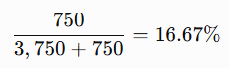
of the combined value.
A value-neutral transaction would therefore have issued enough AGL shares to give PHL holders roughly 16.67% of the enlarged company.
The required new AGL shares would have been:
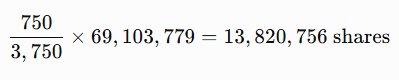
Actual new AGL shares:
13,022,334
Difference:
13,820,756−13,022,334=798,422 AGL shares
At the Deloitte midpoint, PHL shareholders as a class received approximately 798,000 fewer AGL shares than a neutral standalone-value exchange would indicate.
The corresponding neutral ratio is approximately:
4.523 PHL shares for one AGL share
The actual ratio of 4.8 therefore required PHL shareholders to surrender about 6.1% more PHL shares for each AGL share.
Deloitte high-value scenario
Using:
AGL: TT$4.0 billion
PHL: TT$820 million
PHL represents:
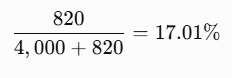
of the combined standalone value.
The neutral ratio is approximately:
4.413 PHL shares for one AGL share
Again, that is below 4.8.
What Deloitte’s figures show
Deloitte case | PHL share of combined value | Neutral PHL:AGL ratio | Actual ratio |
Low | 16.27% | 4.656 | 4.800 |
Midpoint | 16.67% | 4.523 | 4.800 |
High | 17.01% | 4.413 | 4.800 |
Across all three internally consistent Deloitte cases, the 4.8 ratio favoured Agostini’s existing shareholders.
That does not mean Deloitte’s report said the offer was unfair. It did not provide a fairness opinion on the negotiated ratio. But its valuation figures do not independently validate 4.8 either.
Step 3: Calculate the post-transaction value properly
The correct post-acquisition formula is:
Post-deal AGL value per share=

The value delivered for each PHL share is then:
Post-deal AGL value per share÷4.8
Using Deloitte’s midpoint values and assuming no synergies or transaction costs:

That is the estimated post-deal value of one enlarged AGL share.
The value delivered for one PHL share is therefore:

But Deloitte’s standalone midpoint value for PHL was TT$12.00.
That represents a shortfall of approximately:

The same analysis across Deloitte’s range produces the following results:
Scenario | Post-deal AGL value | Value delivered per PHL share | PHL standalone value | Shortfall |
Low | TT$50.90 | TT$10.60 | TT$10.88 | 2.5% |
Midpoint | TT$54.79 | TT$11.42 | TT$12.00 | 4.9% |
High | TT$58.69 | TT$12.23 | TT$13.12 | 6.8% |
This is the central weakness in the TT$14 headline.
The TT$14 calculation assumed that Agostini’s pre-transaction market price could simply be carried forward. A consistent intrinsic-value calculation using Deloitte’s own numbers produces a value closer to TT$10.60–TT$12.23 per PHL share before synergies.
Step 4: My independent valuation cross-check
A valuation should never rely on only one methodology.
For PHL, I considered:
normalized earnings;
free cash flow and owner earnings;
book value and residual-income returns;
dividend capacity;
the quality and duration of its franchise rights;
foreign-exchange and country risks;
TTSE liquidity; and
PHL’s subsequent operating performance.
For Agostini, I considered:
normalized earnings after removing unusual acquisition effects;
book value attributable to AGL shareholders;
non-controlling interests;
dividends;
the complexity of its conglomerate structure;
acquisition and integration risk;
regional growth; and
local-market liquidity.
Independent PHL range
PHL’s fiscal 2024 EPS was approximately TT$1.08. Fiscal 2025 EPS subsequently increased to TT$1.15.
Applying a normalized P/E range of approximately 10.5 to 12 times produces:
TT$1.08×10.5=TT$11.34
to:
TT$1.15×12=TT$13.80TT
PHL’s 2024 book value was approximately TT$5.99 per share. Given a return on equity in the high teens, a price-to-book range of approximately 1.8 to 2.2 times gives:
TT$5.99×1.8=TT$10.78
to:
TT$5.99×2.2=TT$13.18
Combining the earnings, cash-flow and residual-income approaches produces a reasonable PHL range of approximately:
TT$11.75–TT$13.75 per share, with a central estimate of TT$12.75.
PHL’s audited 2025 results subsequently reported revenue of TT$1.422 billion, up 5%; parent earnings of TT$70.8 million, up from TT$66.4 million; EPS of TT$1.15, up from TT$1.08; and operating cash flow of TT$182.0 million, up from TT$143.0 million. Those results support the view that PHL remained a resilient, cash-generative business after the takeover was announced.
Independent AGL range
Using normalized AGL EPS of approximately TT$3.15–TT$3.35 and a P/E range of roughly 15 to 16.5 times gives an indicated range of approximately TT$47.25–TT$55.28.
A book-value and residual-income analysis, dividend cross-check and allowance for Agostini’s regional diversification support an overall range of approximately:
TT$49–TT$56 per AGL share, with a central estimate of TT$52.50.
Agostini’s fiscal 2024 results reported revenue of approximately TT$5.1 billion, operating profit of TT$517.8 million, shareholder profit of TT$242 million and EPS of TT$3.51 before subsequent comparative restatements.
Base-case exchange ratio
Using the central estimates:

That suggests a central exchange ratio of approximately:
4.12 PHL shares for one AGL share.
The purpose of this calculation is not to claim that 4.12 is the only possible fair ratio. Public information does not provide the precision of a court-grade appraisal.
A more defensible conclusion is that the combined valuation evidence supports a broad reasonable corridor of approximately 4.1–4.6 PHL shares per AGL share.
The actual ratio of 4.8 sits beyond the offeror-favourable end of that range.
Want content like this straight to your inbox? Join our mailing list below (opens in new window).
Join Mailing List
Step 5: Compare PHL’s economic contribution with the ownership received
Using the companies’ fiscal 2024 results, a simple combination produces the following:
Measure | PHL contribution to combined group | Ownership received |
Revenue | 21.0% | 15.856% |
Operating profit | 18.6% | 15.856% |
Profit before tax | 18.1% | 15.856% |
Parent-attributable earnings | 21.5% | 15.856% |
Operating cash flow | 30.9% | 15.856% |
Parent equity | 17.2% | 15.856% |
Total assets | 16.1% | 15.856% |
This is not formal acquisition accounting. It excludes purchase-price adjustments, transaction costs, synergies, tax consequences and other consolidation effects.
Nevertheless, it is revealing.
PHL contributed more than the ownership percentage former PHL shareholders received on almost every major operating and financial measure.
Step 6: Test earnings accretion and dilution
Agostini’s fiscal 2024 parent earnings were approximately TT$242.3 million.
PHL’s parent earnings were approximately TT$66.4 million.
Simple combined earnings:
TT$242.3m+TT$66.4m=TT$308.7m
AGL’s pre-transaction EPS was:

Post-transaction EPS, using the enlarged share count:
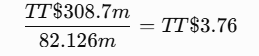
That represents immediate EPS accretion of approximately:

for legacy Agostini shareholders.
Now consider former PHL shareholders.
Before the transaction, they collectively owned earnings of TT$66.4 million.
After the transaction, their 15.856% share of combined earnings would represent:

Their initial look-through earnings interest therefore fell from TT$66.4 million to approximately TT$49.0 million—a decline of roughly 26.3%, before synergies.
This is the clearest explanation of why the transaction was immediately accretive to legacy Agostini shareholders.
PHL shareholders surrendered a business contributing approximately 21.5% of combined parent earnings but received only 15.856% of the enlarged shares.
Step 7: Consider the dividend impact
PHL’s ordinary fiscal 2024 dividends amounted to approximately TT$0.52 per share: an interim dividend of TT$0.16 and a final dividend of TT$0.36. Agostini’s fiscal 2024 dividend was TT$1.53 per share.
A shareholder exchanging 4.8 PHL shares gave up recurring PHL dividends of:
4.8×TT$0.52=TT$2.496
and received one AGL share paying approximately:
TT$1.53
That is a reduction in recurring dividend income of approximately:

PHL approved a special dividend of TT$0.50 per share in connection with the takeover, providing TT$2.40 for each 4.8-share block. That was meaningful one-time compensation, but it did not permanently replace the lower recurring dividend stream.
For income-oriented PHL shareholders, this may have been an important reason to reject the offer.
What about takeover synergies?
Agostini identified potential benefits involving procurement, vertical integration, supplier relationships, digital platforms, e-commerce and organizational efficiencies.
However, Deloitte stated that the expected synergies had not been quantified and therefore were not included in its valuation.
At Deloitte’s midpoint values, the combined standalone value was TT$4.5 billion.
For PHL shareholders’ 15.856% ownership to equal their TT$750 million standalone value, the combined company would need to be worth:

The transaction would therefore need to create approximately:
TT$4.73bn−TT$4.50bn=TT$230m
of additional capitalized value merely to bridge the midpoint allocation gap.
That TT$230 million is not annual cost savings. It is the present value of the total future synergies, after considering implementation costs, taxes, risks and timing.
Synergies could certainly justify a higher exchange ratio. But for that argument to be persuasive, they should be:
quantified;
realistically achievable;
valued after costs and risks; and
allocated fairly between the shareholders contributing to their creation.
The public valuation did not demonstrate that this had occurred.
Was PHL an attractive business after the offer was announced?
PHL’s subsequent results matter, not because hindsight should be used mechanically to rewrite a valuation made at an earlier date, but because they help us assess whether the underlying investment thesis was sound.
For fiscal 2025, PHL reported:
revenue of TT$1.422 billion, up 5%;
parent earnings of TT$70.8 million, up 6.6%;
basic EPS of TT$1.15, up from TT$1.08;
cash generated from operations before interest and tax of TT$239.3 million, up from TT$191.1 million;
net operating cash flow of TT$182.0 million, up from TT$143.0 million; and
an improved net-debt-to-equity ratio, including lease liabilities.
These are not the results of a distressed or deteriorating company.
PHL remained profitable, expanded revenue, improved earnings and generated substantial cash while reinvesting in its restaurant network.
That reinforces the argument that PHL shareholders were giving up a valuable standalone asset, not merely accepting a rescue premium for a struggling company.
My conclusion on the 4.8 ratio
The offer had legitimate benefits.
Former PHL shareholders received an interest in a larger, more diversified regional group. They gained exposure to several industries and markets, could participate in future synergies, received a premium relative to PHL’s referenced market price and benefited from a special dividend.
But those advantages do not prove that 4.8 was financially fair.
The available evidence suggests:
the headline TT$14 calculation was a market-price snapshot, not a full post-deal valuation;
PHL shareholders received only 15.856% of the enlarged company;
Deloitte’s own values imply neutral ratios of approximately 4.41–4.66;
my public-information valuation cross-check suggests a central ratio near 4.12;
PHL contributed more than 15.856% of combined earnings, cash flow and equity;
the transaction was immediately EPS-accretive to legacy AGL shareholders;
former PHL shareholders’ initial look-through earnings were materially reduced;
recurring dividend income declined; and
the synergies required to close the valuation gap were not publicly quantified.
My balanced conclusion is:
The 4.8 exchange ratio appears to have been economically favourable to legacy Agostini shareholders and was not demonstrated, on the publicly available information, to provide full standalone value to PHL shareholders.
That is not the same as saying the transaction was unlawful. Legal fairness and valuation fairness are related but distinct questions.
Rights of PHL shareholders who did not accept
A non-accepting shareholder should obtain Trinidad and Tobago securities-law advice promptly. Statutory deadlines and the shareholder’s precise registration or beneficial-ownership position matter.
The general process under By-law 26 is as follows:
When the threshold is crossed
Where at least 90% of the relevant class is acquired by the offeror, its affiliates and associates, an eligible holder whose securities were not counted in reaching that percentage may require the offeror to purchase the holder’s securities.
Notice from the offeror
Within 30 days after becoming aware that the rights have arisen, the offeror must send the eligible holder written notice.
The notice must state:
the offered price;
how the price was calculated;
where supporting material can be inspected; and
the right to obtain a Court determination of fair value.
The shareholder’s election
Within 60 days after the notice, a shareholder wishing to sell may either:
accept the offeror’s price; or
notify the offeror that the shareholder wants the Court to determine fair value.
Court application
Where Court-determined value is requested, the offeror must apply to the Court within 90 days after the original notice.
If the offeror fails to send the required notice, the shareholder may, after giving the offeror 30 days’ notice of the intention to do so, apply to the Court directly.
The Court may appoint one or more appraisers to assist in fixing fair value.
A non-accepting shareholder should therefore consider:
confirming whether the shares are registered directly or held through a broker or nominee;
checking whether any notice was sent to the broker, TTCD address or registered address;
writing to Agostini requesting the acquisition and settlement date, the percentage acquired, and confirmation of whether By-law 26 applies;
expressly reserving all statutory rights;
requesting the proposed price, valuation basis and supporting documents; and
consulting local counsel before signing, selling, transferring or waiving anything.
This section is a general explanation of the published By-laws, not individual legal advice.
Building and protecting wealth across the Caribbean
Transactions like this demonstrate why investment management involves more than selecting companies with recognizable names or attractive dividend yields.
Investors must also evaluate:
ownership structures;
minority-shareholder protections;
takeover terms;
valuation assumptions;
liquidity;
governance;
currency and country concentration;
and how local investments fit within a globally diversified wealth plan.
At Wealth with Daniel, I help Caribbean professionals, entrepreneurs, executives and families manage these broader decisions, from reviewing concentrated local portfolios and assessing investment opportunities to building diversified international portfolios designed around their long-term goals, liquidity needs and risk tolerance.
Good investing is not merely about owning good businesses.
It is also about ensuring that when corporate actions occur, the value you spent years accumulating is properly understood, protected and incorporated into your wider wealth strategy.
Book a consultation with me at WealthwithDaniel and let’s review what this means for your broader wealth plan.
As always, no pressure, just perspective.
-Daniel Tittil, CFA, CAIA, MSc.
Lead Advisor at WealthwithDaniel.com
Chief Investment Officer at Legacy Wealth Management (Cayman) Ltd.
Portfolio & Wealth Manager, Director at Admiral Capital
Want content like this straight to your inbox? Join our mailing list below.
Author’s note: The valuation analysis is based solely on publicly available information and is intended for investor education. It is not a formal valuation, fairness opinion, investment recommendation or legal opinion.
Appendix
What investors should learn from a stock takeover
1. A quoted premium is not the same as fair value
An offer can show a 30% market premium and still undercompensate shareholders economically.
Market price is one reference point. It is not always intrinsic value—particularly in a thinly traded market.
2. Value both companies on the same basis
Use the same valuation date and compatible assumptions.
Compare:
normalized earnings;
free cash flow;
book value and returns on equity;
dividend capacity;
DCF values;
comparable-company multiples;
debt and non-controlling interests; and
business-specific risks.
3. Calculate the enlarged share count
For a share-funded acquisition, always identify:
shares outstanding before the transaction;
new shares issued;
total shares afterward; and
the ownership percentage received by target shareholders.
4. Compare contribution with ownership
Ask what percentage of combined:
earnings;
cash flow;
operating profit;
assets; and
equity
the target contributes—and compare it with the percentage ownership issued.
5. Test accretion and dilution
Calculate post-deal:
EPS;
book value per share;
dividend income;
free cash flow per share; and
look-through earnings for each shareholder group.
A deal that is strongly accretive to the buyer’s shareholders may be transferring value from the target’s shareholders.
6. Demand quantified synergies
“Synergies” should not be used as a vague justification for an unfavourable ratio.
Investors should ask:
How much are the synergies?
Who creates them?
How long will they take?
What will implementation cost?
How are they being shared?
7. Examine who controls both sides
Related-party and common-control transactions require especially careful governance, independent review and transparent value allocation.


Comments